💬 See something worth sharing? Highlight any text to share.
by Tyler King, freelance writer
First opened on March 10, 2010, the National Leprechaun Museum is a radical departure from traditional curatorial practices. Located at 2/3 Mary’s Abbey in Dublin (near the Jervis Street Luas stop), it is a guided storytelling journey through the history of Leprechaun lore and Irish mythology, dating back over 1,000 years. Unlike more traditional museums that display statues and artifacts in glass cases, this institution is strictly a narrative experience. Following a major refurbishment in 2023, the museum streamlined its layout from a 12-room maze into four high-density “narrative chapters.”
The Price of Purity: The Tale of the Ulster King
The tour begins in the Optical Illusions Tunnel, a space designed to mentally detach visitors from the modern world. Here, guests learn about the original interpretation of the Leprechaun and how it has evolved from medieval texts to modern mascots. A key story in this section involves an ancient Ulster King who was nearly held hostage by mischievous water-dwelling creatures. After escaping his captors, he ignored their warning not to swim in a nearby lake and was disfigured by a sea serpent. In those times, royalty had to be both spiritually and physically pure, so the injury cost him his crown and status.
From Peasant Cottages to Selkie Shores
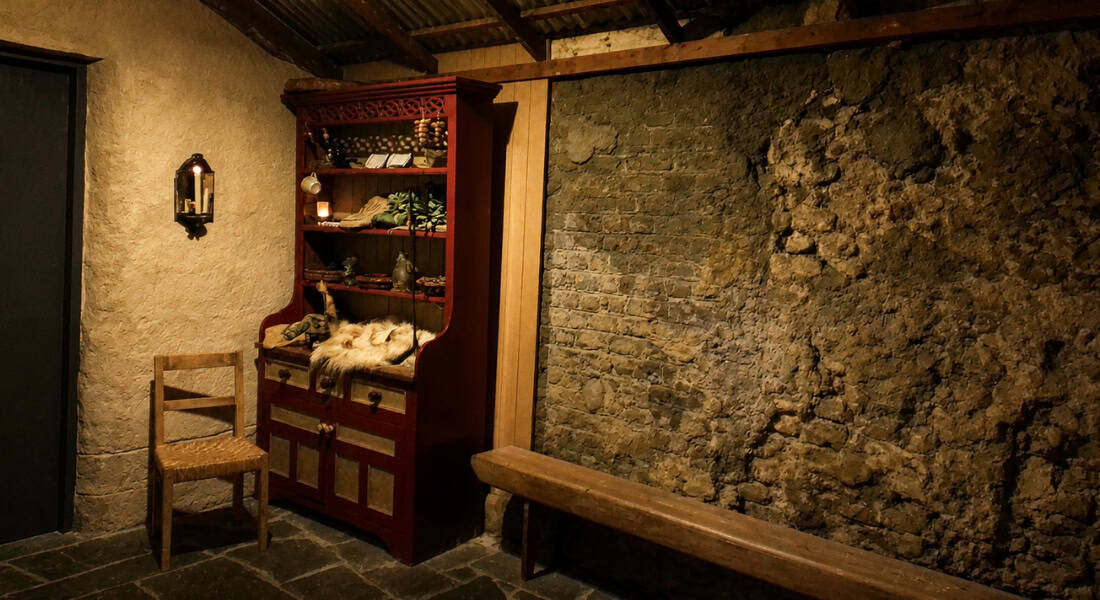
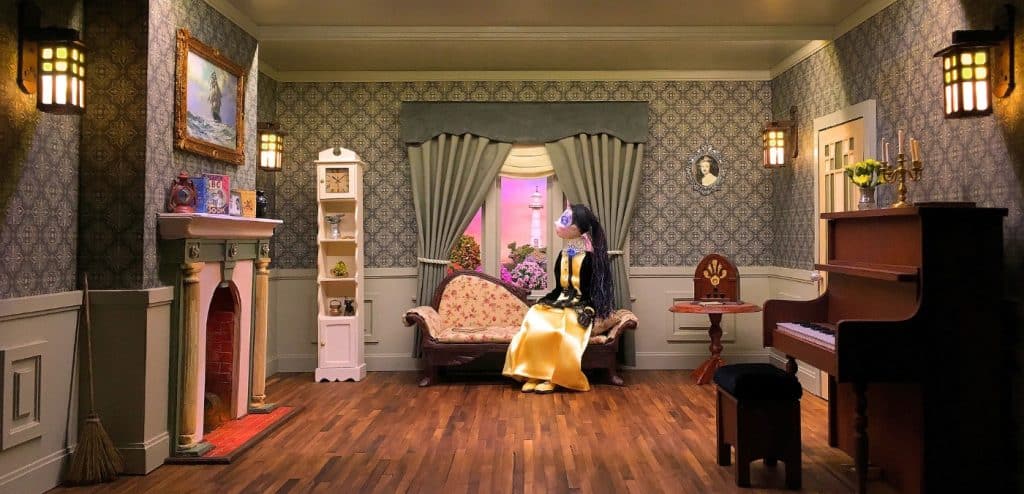
After the opening legends, the group is guided into a recreated 17th-century Irish cottage. This space serves as a history lesson on how Ireland was once a nation where many families lived in cramped homes and oral storytelling was the primary form of entertainment.
One of the most moving tales told here is that of three brothers who discovered six beautiful Selkies (seal-women) dancing on the beach. While the two older brothers used force and theft to trap their brides on land, the youngest brother acted out of true love. He offered to return his Selkie’s skin to the ocean if she would simply agree to meet him every night. His kindness was rewarded with genuine happiness, while his selfish brothers eventually met their demise.
Iron, Fire, and Fairy Omens
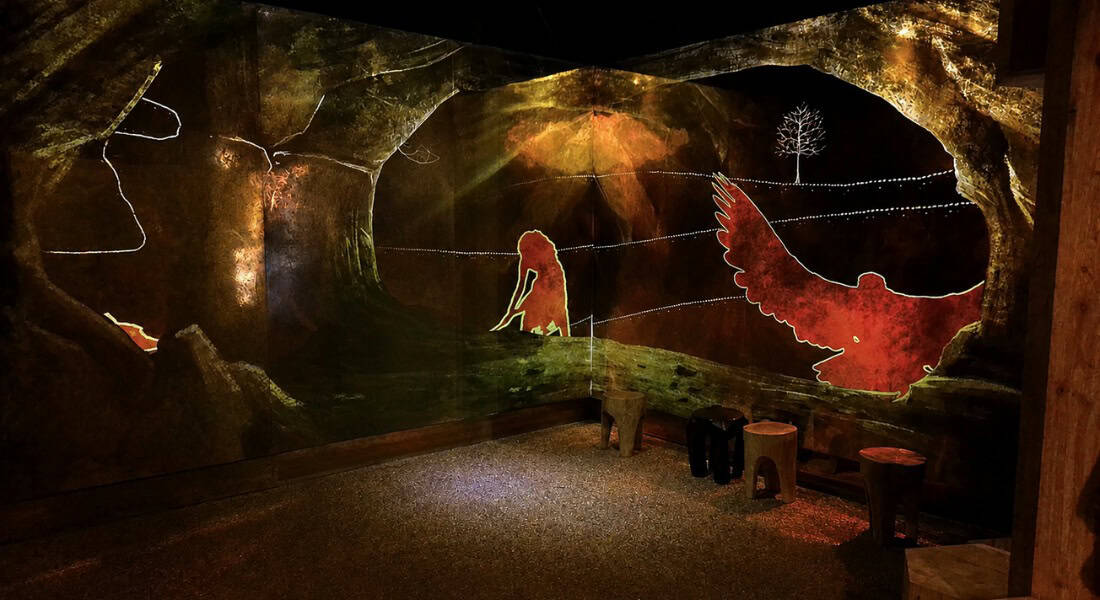
Next, visitors enter a room that looks like a starlit forest. Here, the stories take a darker turn as the guide explains the lore of the “Aos Sí” (the people of the mounds). A famous tale in this room describes a forest fairy who kidnapped a human baby from an aristocratic family, replacing it with a disfigured “changeling.” The mother attacked the creature with an iron fire poker, as fairies are vulnerable to iron. However, harming a fairy child is said to bring a bad omen; in the struggle, the hot iron set the house ablaze, tragically killing the serving staff inside.
The Trickster’s Mark: The Field of Red Garters
The final physical room resembles the Giant’s Causeway in Northern Ireland. In this space, visitors experience the “Oversized Furniture Room,” where massive tables and chairs create a scale-displacement effect, making everyone feel “leprechaun-sized.”
The guide then tells the classic story of Tom Fitzpatrick, a young Irishman who captured a Leprechaun to find his buried gold. Tom marked the exact plant where the gold was hidden by tying a red garter to it. He made the Leprechaun promise not to remove the marker while he went to fetch a shovel, only to return and find that the clever trickster had placed an identical red garter on every single plant in the field.
DarkLand and the “Most Boring” Debate
The museum’s unique approach was put to a public test in April 2024. The gaming website Solitaired.com released a report that analyzed over 66 million Google reviews to identify the world’s “most boring” attractions. The National Leprechaun Museum was ranked 38th globally, making it the only Irish site to land in the top 100. This sparked a flurry of media coverage across Ireland, with outlets like Newstalk and The Echo questioning whether a storytelling-first experience can compete with modern “high-octane” tourism. However, the museum and its fans have embraced the title as a badge of honor. To them, the ranking simply proves that this experience is for those who value cultural depth and the ancient art of performance over cheap, high-tech thrills.
For adults looking for a more intense experience, the museum offers “Darkland” tours on Thursday, Friday, and Saturday evenings. These sessions explore the macabre side of Irish folklore (including the wailing Banshee and the shape-shifting Púca) that are far too gruesome for the daytime family tours. Whether you are there for the history or the haunts, I truly recommend taking an hour of your day to check it out for yourself. Just be sure to stop by the gift shop for a souvenir, such as a folklore book, a gold coin, or a Leprechaun snow globe, before you head back out into the streets of Dublin!
National Leprechaun Museum FAQ
-
What is the National Leprechaun Museum?
The National Leprechaun Museum is a guided storytelling attraction in Dublin, Ireland, dedicated to Irish folklore and mythology. Unlike traditional museums, it displays no physical artifacts. Instead, professional storytellers lead visitors through immersive, theatrically designed rooms that bring over 1,500 years of Irish myth to life, including legends of leprechauns, selkies, banshees, and the Aos Sí.
-
Where is the National Leprechaun Museum located?
The museum is located at 2/3 Mary’s Abbey (also referenced as Twilfit House on Jervis Street), Dublin 1, Ireland. The nearest public transit stop is the Jervis Street Luas stop. It is also within walking distance of the Spire in central Dublin.
-
When did the National Leprechaun Museum open?
It opened on March 10, 2010, following a seven-year development period led by director Tom O’Rahilly, who began the project in 2003.
-
What are the museum’s hours of operation?
As of 2026, the museum’s hours of operation are:
- Monday–Saturday: 10:00 AM – 6:30 PM
- Sunday: 10:30 AM – 6:30 PM
- Darkland Evening Tours (Thursday–Saturday): 7:00 PM, 7:30 PM, 8:00 PM, and 8:30 PM Tours depart every 30–60 minutes during daytime hours. Punctuality is required, as late arrivals cannot join a tour already in progress.
Visit the museum’s home page for any updates on hours of operation.
-
How much do tickets cost?
Ticket Type Daytime Darkland (Evening) Adult €16–€18 €22–€24 Senior / Student €12 N/A Child (ages 7–17) €10 N/A (18+ only) Family (2 adults, 2 children) €40–€44 N/A Darkland tours are strictly for guests aged 18 and older.
These prices are as of May 2026. For updates, visit the National Leprechaun Museum’s tickets page. -
What is the layout of the museum?
Following a major refurbishment completed in summer 2023, the museum was redesigned from a 12-room maze into four high-density narrative chapters:
- Optical Illusions Tunnel. A disorienting entry experience that mentally separates visitors from the modern world while introducing the origins of leprechaun lore.
- 17th-Century Irish Cottage. A recreated peasant cottage where guides explore how oral storytelling functioned as the primary entertainment for Irish families.
- Starlit Forest Room. A darker space covering the Aos Sí (people of the mounds) and darker fairy folklore, including changelings and iron lore.
- Giant’s Causeway Room / Oversized Furniture Room. A scale-displacement space modeled after Northern Ireland’s Giant’s Causeway, where oversized furniture makes visitors feel leprechaun-sized.
-
What stories are told during the tour?
Guides draw from an extensive knowledge of Irish mythology and tailor stories to each group. Recurring tales include:
- The Ulster King. An ancient king who defied a warning after escaping water-dwelling creatures and was disfigured by a sea serpent, costing him his crown.
- The Selkie Brothers. Three brothers who encountered seal-women on a beach; only the youngest, who acted with genuine kindness, found lasting happiness.
- The Changeling. A forest fairy who kidnapped a human infant and replaced it with a disfigured creature; the mother’s iron fire poker attack inadvertently set the house ablaze.
- Tom Fitzpatrick and the Leprechaun. A young Irishman who captured a leprechaun and marked the spot of buried gold with a red garter, only to return and find an identical garter on every plant in the field.
-
What is the Darkland tour?
Darkland is an adults-only evening tour (18+) offered Thursday through Saturday. It explores the macabre and gruesome side of Irish folklore omitted from daytime family tours, including legends of the wailing Banshee (Bean-Sidhe) and the shape-shifting Púca. Tours run approximately 60 minutes.
-
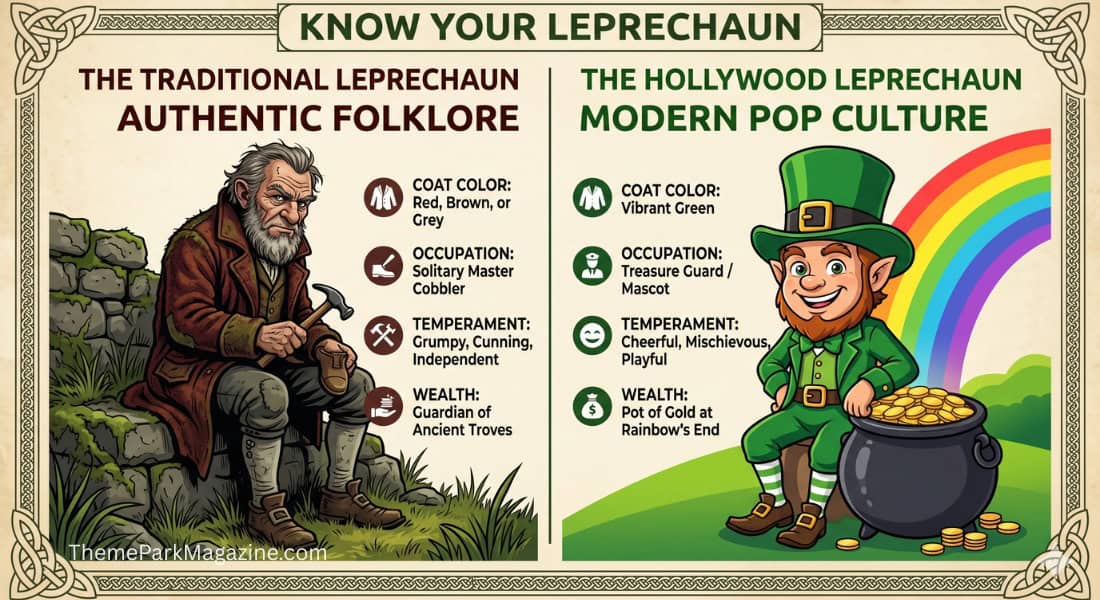
What is the authentic folkloric leprechaun versus the popular culture version?
The museum distinguishes sharply between the two:
Feature Folklore Leprechaun Pop Culture Version Clothing Red, brown, or grey Vibrant green Occupation Solitary master cobbler Treasure guard / mascot Temperament Grumpy, cunning, independent Cheerful and mischievous Origin Medieval Irish texts 19th-century literature; 20th-century American film The green-suited, gold-hoarding image is largely attributed to 19th-century literature and films such as Disney’s Darby O’Gill and the Little People.
-
What other mythological creatures does the museum cover?
Beyond leprechauns, the museum introduces visitors to the broader Aos Sí supernatural ecosystem, including:
- Banshee (Bean-Sidhe): A family spirit whose wailing foretells an imminent death.
- Púca: A shape-shifting entity that can appear as a dark horse or goat, capable of offering either guidance or harm.
- Changeling: A fairy child swapped for a human infant, historically used to explain childhood illnesses or disabilities.
- Selkies: Seal-women from coastal Irish and Scottish mythology who could shed their skins to take human form.
- Clurichaun: A leprechaun cousin associated with wine cellars and revelry.
-
Does the museum use technology or screens?
No. The museum has intentionally resisted the introduction of digital screens or AR headsets, arguing that technology would clash with its commitment to the ancient art of oral storytelling. The experience relies entirely on human storytellers and atmospheric room design.
-
Was the museum really ranked one of the world’s most boring attractions?
In April 2024, the gaming analytics website Solitaired.com (not the most reputable for such a story) published a report analyzing over 66–67 million Google reviews, ranking the National Leprechaun Museum 38th on a list of the 100 “most boring” attractions globally. It was the only Irish site to appear in the top 100.
The museum and its supporters have embraced the designation, viewing it as evidence that the experience is designed for visitors who value cultural depth and oral tradition over high-tech spectacle. The museum holds a 4.5-star rating on Tripadvisor and has received a Travellers’ Choice award.
-
Does the museum offer educational programs?
Yes. The museum offers specialized school tours and resource packs aligned with Ireland’s Social, Environmental, and Scientific Education (SESE) curriculum, integrating with subjects including History, Irish Language, Geography, Science, and Art. Irish-language tours are available by appointment.
-
Does the museum have a podcast?
Yes. Talking Stories, launched in 2016 and updated bimonthly, features museum storytellers exploring categories of Irish myth that historical bards (Filí) were required to master. Season 3 (2025–2026) covers Adventures & Voyages, Wooings & Feasts, Deaths & Samhain, and Terrors & Caves. You can find it on Spotify.
-
Is the museum part of any international cultural organizations?
Yes. The National Leprechaun Museum is a founding member of the European Fairy Tale Route, an official heritage route recognized by the Council of Europe, which contextualizes Irish folklore within broader European mythological traditions.
-
Is a good level of English required?
Yes. The storytelling format is language-dependent, and the museum notes that a good level of English is necessary for the full experience. Irish-language tours can be arranged by appointment.
-
Is there a gift shop?
Yes. The museum gift shop offers folklore books, gold coins, Leprechaun snow globes, and other Irish mythology–themed souvenirs.
-
Where can I get more information?
For the most current ticket pricing, tour availability, and event listings, visit leprechaunmuseum.ie.
Explore More: Videos
Dublin Has A Leprechaun Museum Where You’re Leprechaun Sized
Explore More: Resources
- Website: National Leprechaun Museum (official)
Your Support Makes Theme Park Magazine Possible
Love our independent, ad-free theme park coverage? We’re passionate about bringing you these stories without the usual ad clutter, and it’s only possible thanks to supporters like you.
Your contribution directly funds more in-depth articles, stunning visuals, and keeps our focus purely on the magic. Please donate via PayPal today to help us continue this mission. – Joe Tracy, Editor
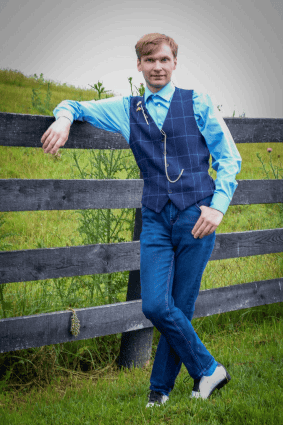
Tyler King first visited the National Leprechaun Museum in Dublin during his third trip to Ireland, meticulously documenting his experiences. Upon discovering that Theme Park Magazine features articles on immersive themed attractions, he seized the opportunity to publish his professional debut. This milestone marks the start of his journey into the world of themed entertainment: a career path he looks forward to expanding with future contributions.