💬 See something worth sharing? Highlight any text to share.
by Spencer Bollettieri, lead freelance writer for Theme Park Magazine
At the Edelman Fossil Park & Museum of Rowan University, guests are invited to immerse themselves in the world of paleontology, living out the dreams of every child who sat down to watch Jurassic Park or one of thousands of documentaries shown in their afternoon science classes. More than the usual canned fossil hunt, visitors are invited to dig into ancient clay to find remnants of a lost world, venture into the fertile imaginations of modern paleontologists, and learn what it takes to preserve the past and save the future.
On a sunny day at the Edelman Fossil Park & Museum of Rowan University, visitors dig into the earth with a wooden spoon and a plastic bucket. But the Jersey Shore they’re searching for has been gone for more than 65 million years.
Back then, this land sat beneath a prehistoric sea. Pterosaurs filled the skies above, massive mosasaurs hunted below, and not far away, dinosaurs like the Dryptosaurus lived, died, and sank into the soil, waiting for their stories to be told.
Unearthing the Past: The Quarry Dig Experience
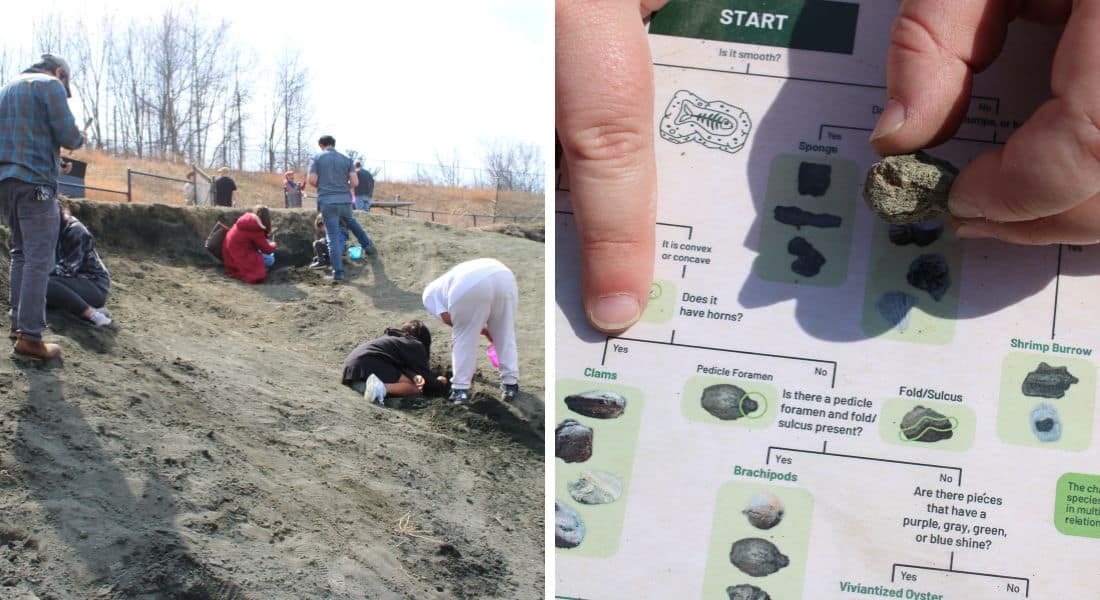
At the park’s quarry, those stories aren’t all locked behind glass or published on a placard. For the price of admission, guests step directly into the role of a paleontologist. It’s among the only quarries east of the Mississippi where the public can take part in organized fossil digs, offering a hands-on experience that’s as approachable as it is educational.
The process begins with a short orientation led by on-site staff, who walk visitors through where to dig, what to look for, and how the hour-long session works. Then, with little more than a wooden spoon in hand and a bucket, guests are welcomed into the quarry.
The tools are simple but effective at getting the job done. While professional paleontologists rely on specialized equipment and years of training, the spoon makes the experience accessible to guests of all ages. At the same time, for those who need it, the park offers alternative accessible digging stations where everyone can sort through clay samples at tables rather than navigate the quarry’s terrain.
From the start, aspiring fossil hounds should understand that the experience does require some physical effort, and most guests spend much of the hour standing and digging through dense clay. Although the site is designed so that no one has to dig especially deep or wander far to find something. Still, getting dirty is part of the expedition, and visitors are encouraged to come prepared with water, proper footwear, and a change of clothes.
As the hour ticks by, the quarry becomes more than a canned fossil hunt. Guests sift through the earth, pulling out anything that might be a fossil and setting it aside for later inspection. At the end of the session, finds are brought to the staff, who help clean, identify, and explain each piece brought to them.
Visitors are allowed to keep one fossil found in the quarry. Anything deemed scientifically significant, however, stays behind, added to the park’s collection, with full credit given to the person who uncovered it.
And while New Jersey is famous for dinosaurs like Hadrosaurus and Dryptosaurus, guests shouldn’t expect to unearth anything quite that large or exotic. This was once an ancient seabed, and the fossils reflect that world: mosasaur and shark teeth, fragments of burrows, and, occasionally, something far less glamorous, like a piece of prehistoric crocodile dung. However, it’s a reminder of one of the quarry’s core lessons: every fossil tells a story. Each fragment, no matter how small, is a piece of a much larger puzzle and something incredible in its own right.
Inside the museum, that idea is reinforced. Guests can watch a live simulation demonstrating just how rare fossilization really is, as ping pong balls drop through a machine calculating the odds in real time, letting visitors know that even if it’s not the tooth of some 50-foot marine reptile or piece of a dinosaur, that fossil in their pocket came a long way, defied a lot of odds, and finally has a chance to tell the world about the ancient oceans it once was a part of.
The Cretaceous World: Breathing Life into Fossils
The quarry experience is designed to immerse visitors in the world of paleontology, giving them the chance to touch the past and take part in a story over 60 million years in the making. But it doesn’t end there. Just down the road, that journey continues, as guests come face-to-face with the creatures they’ve been uncovering, and the world those creatures once called home.
After changing their clothes and pocketing their fossils, guests are welcomed to dig deeper into the science of paleontology. Inside, people quickly see there’s more to the profession than just digging up bones and mounting them for display in museums. It’s about making sense of lost worlds, rebuilding them piece by piece, and understanding that impact doesn’t always come from a meteorite.
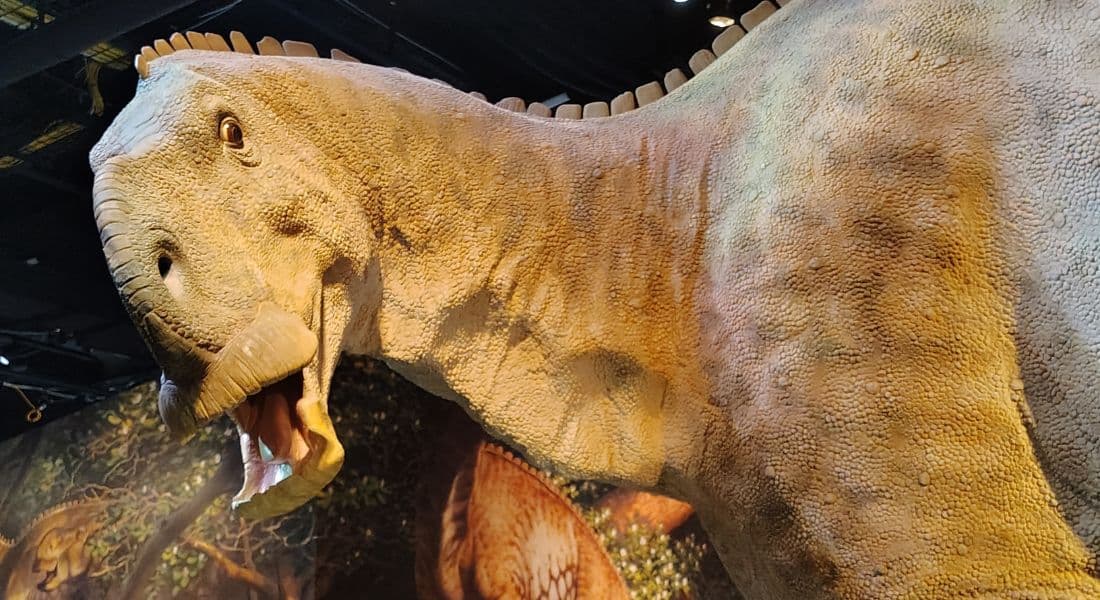
In The Cretaceous World exhibit, visitors are asked to crawl into the mind of a paleontologist and imagine what the world looked like in the late Mesozoic era. A sign invites museum-goers to “breathe in the warm humid air of ancient New Jersey” as they step back in time, seeing the East Coast as scientists and artists have reconstructed it from fossils found in the quarry and nearby sites.
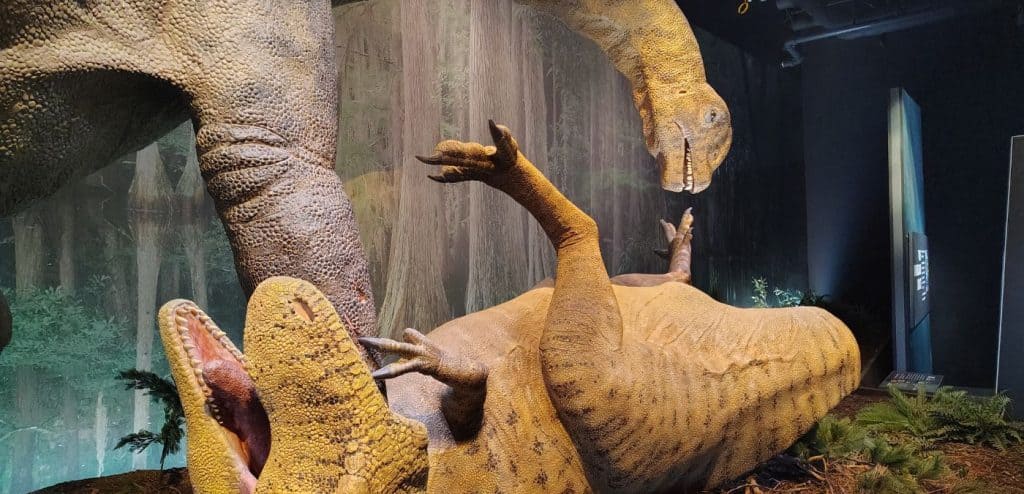
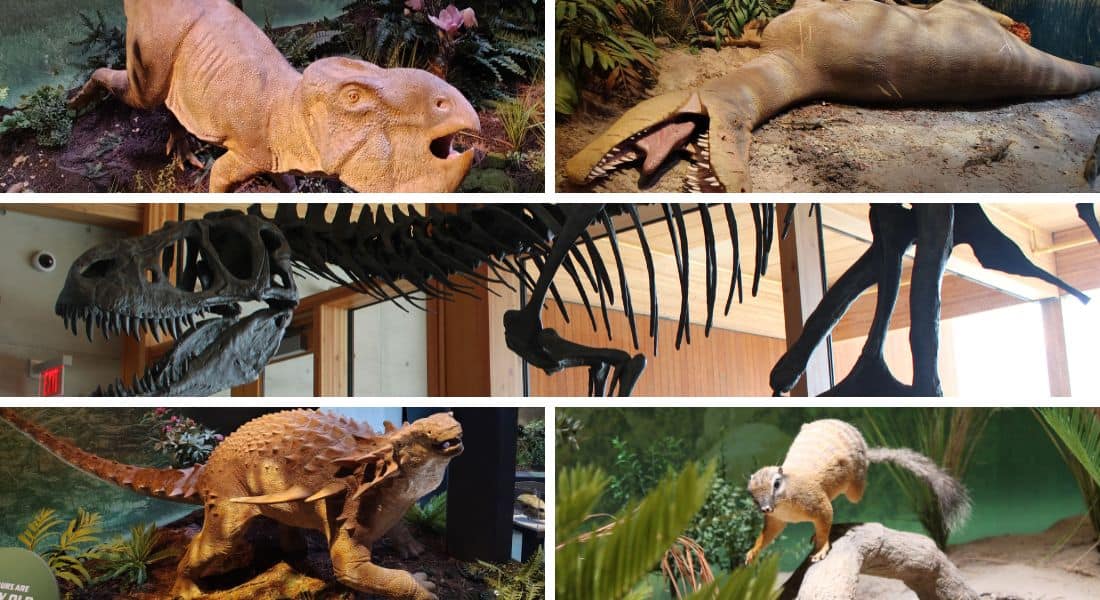
Suddenly, people are surrounded on all sides by primeval forests and seas, with dinosaurs, reptiles, and other life looming overhead. Throughout the exhibit, guests learn the stories of the dinosaurs and the animals that lived beside them. Younger visitors can follow the journey of Mabel the Mammal, a plucky young creature living in the shadow of the dinosaurs, observing them from the safety of her “secret windows.” Meanwhile, older audiences can track the lives of creatures like Dryptosaurus, watching it live, die, and eventually become fossilized after being washed out to sea, or a long-necked Astrodon fending off a hungry Acrocanthosaurus.
Throughout the experience, guests are prompted to think like paleontologists, with questions about whether it was better to live as predator or prey, how evolution works, and what bones can reveal about the creatures they came from. Many exhibits also feature interactive elements. Using an Explorer Key provided at check-in, visitors can play games and complete thought exercises at kiosks throughout the museum, with results tracked on digital leaderboards.
The Cretaceous World immerses visitors in a way that is often underappreciated, focusing on authenticity over the kinds of thrills found in a Jurassic World attraction. When people stop to gasp at a 50-foot mosasaur swimming overhead, or find themselves rooting for Mabel as an early mammal, it’s because it all feels real. Whether it’s the feathered form of a Leptoceratops, a decomposing dinosaur carcass drifting among hungry sea scavengers, or even horseshoe crabs scuttling along the shoreline, each detail helps reinforce that the fossils outside once belonged to living, breathing creatures.
“At the Edelman Fossil Park & Museum, we show dinosaurs as living beings, scarred, worn, and utterly real,” a representative told Theme Park Magazine. They added, “Their reconstructed bodies and trackways capture life in motion and invite empathy. That empathy fosters a deeper connection to the deep past, helping us see these ancient creatures not as abstractions, but as authentic beings that once lived on this very planet.”
At a screening of the museum’s documentary From Fossils to Flesh at New York’s Explorer’s Club, Dr. Kenneth Lacovara, the founding executive director of the Edelman Fossil Park & Museum, and paleoartist Gary Staab spoke about the painstaking effort their teams put into making each diorama and model feel like part of a real ecosystem. Everything, from decomposing dinosaurs to the dung beetles that lived alongside them, was crafted to reflect the realities of a prehistoric world.
As for The Cretaceous World, it taps into the fascination people of all ages have with dinosaurs. While the self-guided tour moves through scenes of life, death, and some very lifelike creatures, it never feels more intense than a typical Jurassic Park film or even The Land Before Time.
The Hall of Extinction & Hope: Lessons for the Future
Beyond The Cretaceous World, visitors enter the Hall of Extinction & Hope, an exhibit that explores the museum’s thesis and aims to leave an impact as deep and profound as the Chicxulub meteorite that ended the dinosaurs’ reign. Inside, guests learn about the harsh realities of extinction, the importance of conservation, and humanity’s power to influence the planet.
Among fossils, microscopes, and models of extinct and endangered animals, guests see the role paleontologists play in helping to tell Earth’s story, one discovery at a time, showing how understanding the past can help save the future, not only for humanity, but for the life it shares the planet with.
The Hall of Extinction & Hope isn’t solely a warning. As the title suggests, it’s also a message of optimism, that people can make a difference, that there are as many fascinating creatures today as there were over 66 million years ago, and that new advancements are being made every day, with the museum itself serving as an example.
Eco-friendly by design, the Edelman Fossil Park & Museum is a net-zero facility, a reminder that the same place that chronicles past extinctions is actively working to prevent countless others.
Hands-On Science: Discovery Forest and Critter Cove
Downstairs, younger visitors can see that paleontology goes beyond dig sites like the quarry outside or the exhibits upstairs. In the Discovery Forest, they learn about the science behind identifying, preparing, and studying fossils. Interactive exhibits show how scientists reach their conclusions and the driving forces behind concepts such as fossilization and natural selection.
Nearby, guests can look into a real fossil preparation lab, where paleontologists clean, restore, and display their finds. It’s a look at the kind of diligence and care required to properly piece together massive creatures like the 85-foot-long Dreadnoughtus, which Dr. Lacovara helped uncover in Argentina.
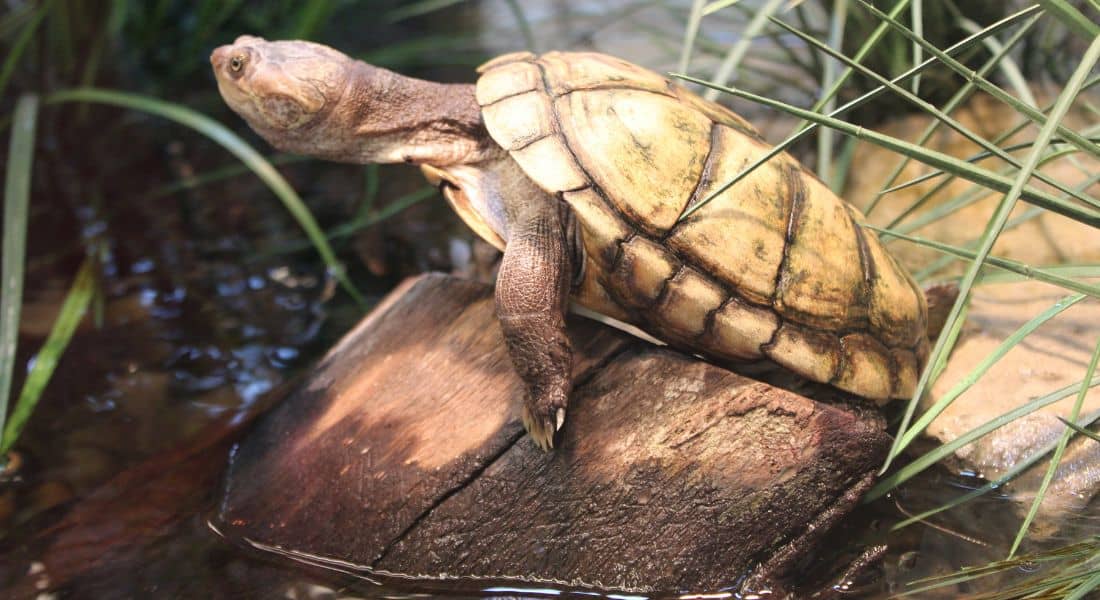
Meanwhile, in Critter Cove, children can interact with “living fossils,” creatures that outlived and, in some cases, predated the dinosaurs. On display are reptiles, invertebrates, and mammals, with opportunities to get up close, including petting a horseshoe crab that doesn’t look a day over 445 million years old.
For those seeking an additional adventure, guests can take part in Expedition Voyager, a separate-ticket virtual reality experience. Equipped with a scanner and a “Time-Dilation Helmet,” visitors are sent back to the Mesozoic Era, where they’re free to explore an ancient landscape filled with dinosaurs and other prehistoric life.
While some of the concepts in the Discovery Forest may be harder for younger children to grasp, they are made accessible through hands-on demonstrations and play. Expedition Voyager, meanwhile, does include a 56-inch height requirement.
Beyond the Exhibits: Playgrounds and Trails
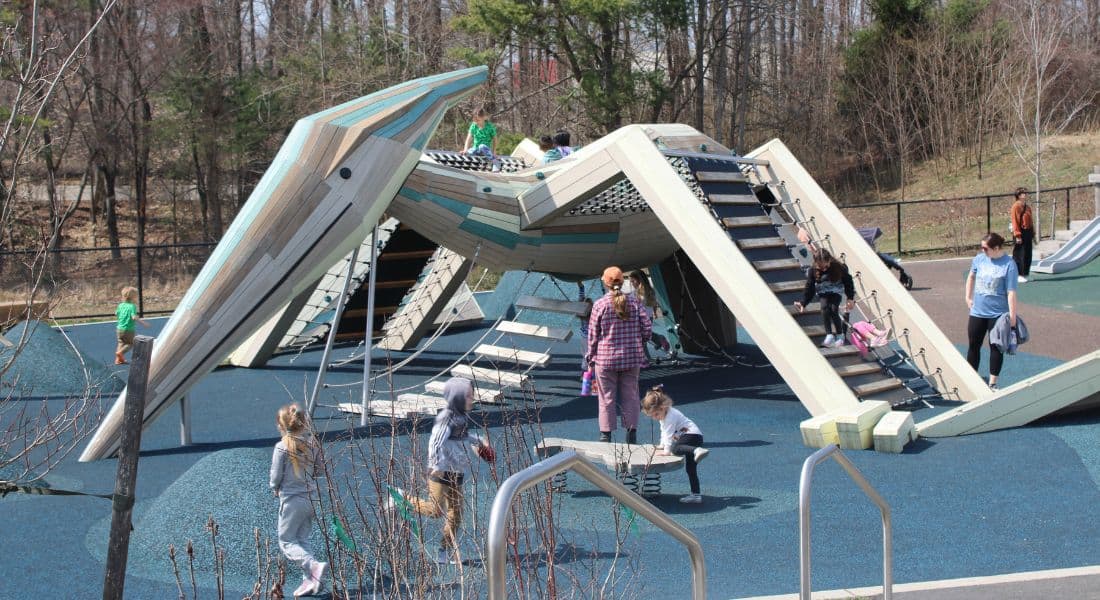
Beyond the exhibits, the Edelman Fossil Park & Museum offers other experiences.
Families can spend time at the Pterosaur Pterrace Playground, where children climb across a 45-foot Pteranodon and dig for play fossils. Additionally, a nearby nature trail winds through shaded trees and along a quiet creek, eventually opening up to a pond surrounded by local plant and animal life. The trails offer a slower, self-guided tour than the museum itself, but one that reinforces the same idea: that the past, present, and future are more connected than they might seem.
For those looking to take a break, the park also offers spaces to relax. Guests can grab coffee at Quarry Grounds Cafe, browse fossils and souvenirs at Darwin & Co., or simply get some fresh air on the veranda overlooking the quarry, watching the same site where, just hours earlier, they may have been digging.
The museum also offers programs like the GeoExplorers Summer Camp to bring younger guests back for what is essentially a paleontological fantasy camp, featuring time in the quarry, hikes along the trails, and lessons about the prehistoric and modern ecosystems that define the site.
Leaving a Legacy
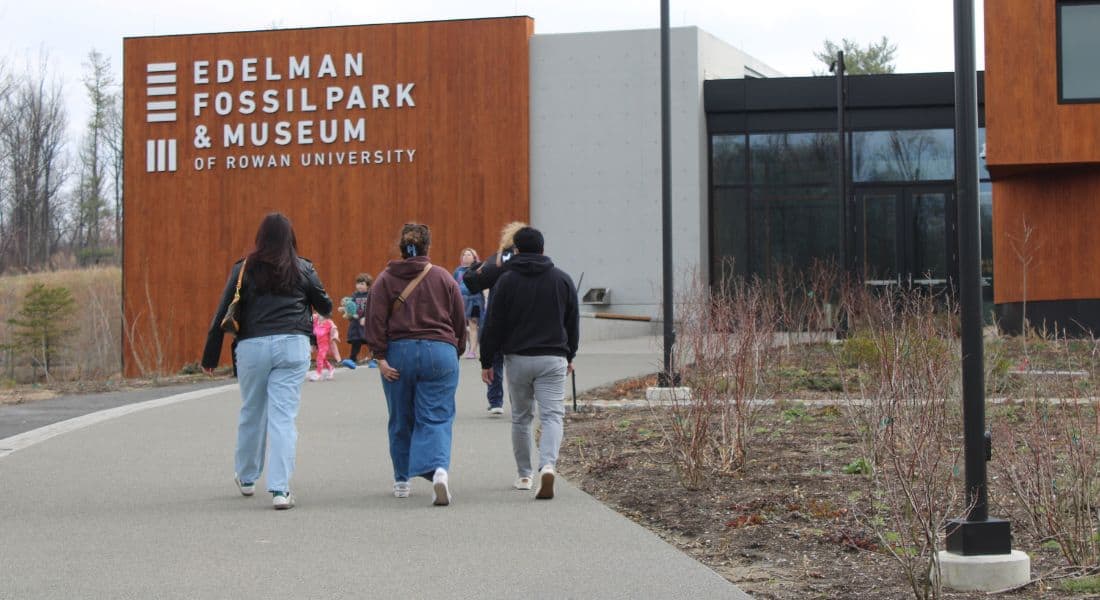
At the end of the day, or perhaps the past 66 million years, the Edelman Fossil Park & Museum of Rowan University isn’t just about looking at the past; it’s about stepping into it.
From the moment guests wander into the quarry to the time they leave the museum, the experience is built around one simple idea: that the past isn’t as distant as it seems. It’s also in the fossils they uncover, the stories they piece together, and the world they walk through, both inside and outside the exhibits.
Long after guests wash the dirt from their hands, what stays with them isn’t just what they saw. A day at the Edelman Fossil Park & Museum comes with the understanding that the ground beneath visitors’ feet still has stories left to tell, that paleontology is as much a science as it is an art form, and that whether it’s the most minuscule mammal or a massive marine reptile, every creature has its place in a world and a legacy to leave behind.
Edelman Fossil Park & Museum of Rowan University FAQ
-
What is the Edelman Fossil Park & Museum, and where is it located?
The Edelman Fossil Park & Museum of Rowan University is an immersive paleontology museum built on a 66-million-year-old fossil-rich deposit. It offers guests the chance to step back into the Cretaceous period to discover the world of dinosaurs, marine reptiles, and prehistoric ecosystems. The museum is located at 66 Million Mosasaur Way in Mantua, New Jersey.
-
When is the museum open?
The museum officially opens to the public on March 29, 2025. Regular operating hours are daily from 10:00 AM to 5:00 PM, with the last entry permitted at 3:30 PM. It is closed on Thanksgiving, Christmas Eve, Christmas Day, and New Year’s Day.
-
How much do tickets cost?
As of May 24, 2026, general admission is $29 for adults (ages 13+) and $24 for children (ages 3–12). Toddlers ages 2 and under are free. General admission grants access to the museum’s galleries, but the Quarry Dig Experience ($25 add-on) and the Expedition Voyager VR experience ($15 add-on) require separate tickets. Advance online reservations are highly recommended.
-
Can anyone dig for fossils in the quarry, and can I keep what I find?
Yes! For an additional fee, guests can take part in the Quarry Dig Experience (open seasonally). Armed with a wooden spoon and a bucket, visitors dig in a 45-foot-deep active research quarry. You are allowed to take home one fossil per visit! If you uncover something of major scientific significance, the museum will keep it for research, but your name will be permanently added to the international fossil record as the finder.
-
What kind of fossils can I expect to dig up?
Because the site was an ancient seabed millions of years ago, you likely won’t be unearthing giant dinosaur bones in the quarry. Instead, visitors frequently discover incredible marine fossils, including shark teeth, mosasaur teeth, burrow fragments, and even fossilized crocodile dung.
-
What is there to see inside the museum?
Inside, visitors can explore The Cretaceous World, which features life-sized dinosaur reconstructions and dioramas, and the Hall of Extinction & Hope, which focuses on the realities of extinction and modern conservation. Younger guests can enjoy hands-on paleontology science in the Discovery Forest and interact with “living fossils” (like horseshoe crabs) at Critter Cove. Guests can also look directly into a real fossil preparation lab to watch scientists at work.
-
What else is there to do on the property besides looking at exhibits?
Beyond the museum walls and the active quarry, the property offers a variety of experiences. Families can climb a 45-foot Pteranodon structure at the Pterosaur Pterrace Playground, walk the scenic, shaded nature trails, or grab a hot panini and coffee at the Quarry Grounds Cafe. For thrill-seekers, the Expedition Voyager provides a premium virtual reality experience that sends guests directly into the Mesozoic Era.
Feature image at the beginning of the article taken by Spencer Bollettieri for ©Theme Park Magazine.
As a biologist, journalist, and writer, Spencer Bollettieri has written for sites such as CBR. Although mostly based out of New York, he’s traveled the world in pursuit of new stories.
Explore More: Videos
Sneak Peek at Edelman Fossil Park & Museum of Rowan University (2025)
The Final Days of Dinosaurs & Inspired Design – Edelman Fossil Park and Museum
Edelman Fossil Park and Museum Visit
Explore More: Resources
- Website: Edelman Fossil Park & Museum of Rowan University (official)
Your Support Makes Theme Park Magazine Possible
Love our independent, ad-free theme park coverage? We’re passionate about bringing you these stories without the usual ad clutter, and it’s only possible thanks to supporters like you.
Your contribution directly funds more in-depth articles, stunning visuals, and keeps our focus purely on the magic. Please donate via PayPal today to help us continue this mission. – Joe Tracy, Editor